

How To Set Up A Delaware Statutory Trust
How a Delaware Statutory Trust Works
- Past Austin Bowlin, CPA
Tabular array of Contents
Add together a header to brainstorm generating the table of contents
Over the last two decades, commercial real manor (CRE) has taken an esteemed seat at the investment table alongside equities, bonds and cash—and information technology is articulate why. CRE may provide greater income and appreciation potential, competitive adventure-adapted returns and significant tax benefits. For the average investor, nevertheless, commercial real estate tin can feel financially out-of-reach and management intensive.
And so, how practice smaller, independent investors tap into the benefits of institutional-grade commercial real estate? A Delaware Statutory Trust (DST) is an increasingly pop option. This investment vehicle gives individual investors an opportunity to acquire passive buying in an institutional-quality asset with a comparatively low minimum investment cost.
What is a Delaware Statutory Trust?
A Delaware Statutory Trust is a real estate ownership structure where multiple investors each hold an undivided fractional interest in the holdings of the trust. The trust is established by a professional real estate company, referred to as "DST sponsor", who beginning identifies and acquires the real estate assets. As individuals invest, their investments displace the upper-case letter used by the DST sponsor to acquire the belongings until it is eventually wholly owned by the investors. Investors ain a benign interest in the trust. This ways that investors hold a percentage of the ownership, and no single owner can claim sectional buying over whatever specific attribute of the real estate.
Key Benefits of a Delaware Statutury Trust
The DST ownership structure comes with many advantages, including revenue enhancement benefits, income potential, the opportunity to buy buying in an institutional-quality nugget and—perhaps almost notably—DSTs are eligible for 1031 exchanges.
DSTs stand up out as a 1031 replacement property option for investors seeking passive income potential and diversified risk by allocating their 1031 exchange proceeds across multiple institutional-form DST properties that are typically much larger and out of accomplish of virtually individual investors.
Delaware Statutory Trusts for 1031 Exchanges
A 1031 Exchange, named for Section 1031 of the U.Southward. Internal Revenue Code, is a transaction approved past the IRS that allows real manor investors to defer the tax liability or upper-case letter gains taxes on the sale of investment holding. DSTs are considered straight property ownership for tax purposes, and equally such, they are eligible for tax-deferred 1031 Exchanges.
To defer revenue enhancement, the proceeds from the sale of the relinquished belongings must be reinvested into some other "similar-kind" replacement holding of equal or greater value inside 180 days of the closing date of the relinquished belongings. Revenue enhancement deferral allows DST investors to preserve all of the equity from the sale of their relinquished belongings so it can continue working for them in their new DST replacement property.
The Basics for a 1031 Exchange piece of work the aforementioned style for every belongings blazon, including DSTs. However, DSTs typically close within 3 to 5 business concern days post-obit the auction of the relinquished property – a significant reward considering strict 1031 exchange rules and deadlines.
Investing in DST Properties
Nearly all commercial existent manor property types are held every bit DST properties, including the four major property types—multifamily, office, industrial and retail—as well as niche property types, like senior housing, medical office and self-storage.
DST existent estate is typically comprised of institutional-grade assets with competitive income potential. Due to the big purchase price of typically $30 one thousand thousand to $100 million, these assets would otherwise be unattainable for a typical individual investor, merely are accessible through the fractional buying offered by a DST.
Although DSTs tin own multiple properties, they typically focus on a single holding type. To diversify across different holding types, an investor tin invest in multiple DSTs.
DST Property Investment Examples (Closed Offerings)

Industrial DST Property
This industrial DST holding is a triple internet lease commercial property located in the Midwest. The property consists of a ane,009,259 sq. ft. distribution facility currently occupied by Amazon equally a fulfillment center. Amazon has a remaining lease term of thirteen.4 years, with two x-year extensions.

Multi-family DST Property
The DST is a stunning "Class A" multi-family community located in the southwest. Developed in 2022, the property is 94.9% occupied and consists of 256,628 rentable sq. ft. spanning across 5 acres. Nestled side by side to a golf game course, the community offers a unique live-work-play opportunity for residents.
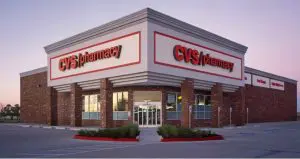
Retail Net Lease DST Portfolio
The DST consists of 27 cyberspace charter essential retail properties located throughout the nation. The properties are 100% leased to 8 different high-quality tenants, all with proven rail records and stiff financials. The weighted average lease term of portfolio is 12 years. The portfolio offers a total of 430,757 rentable sq. ft.

Office DST Property
This office DST is a large 11-story absolute net charter office building located in the Midwest suburbs. The property is currently leased to Zurich American Insurance Company (a leading global insurance provider that insures 90% of Fortune 500 companies) with 25 years remaining and renewal options.
How to Detect DST Properties
National institutional real estate firms referred to as "DST Sponsors" are responsible for vetting, acquiring, and managing the properties included within each Delaware Statutory Trust they put forwards. Once the DST holding has been acquired, a number of parties perform due diligence on the belongings and trust structure. The DST sponsors ultimately packages the DST offering for investors and brings it to market through independent brokers who carry necessary securities licenses to transact DSTs on behalf of clients.
A DST can own one or multiple properties and each DST will generally own a single property blazon. Typically, DSTs own high-quality institutional property, which may permit for greater income and appreciation potential.For example, 1 DST may own a portfolio of class A multifamily apartments, while another may ain an industrial edifice like anAmazon Distribution Center or net lease real manor with corporate guaranteed retail tenants like Walgreens or Whole Foods.
The biggest challenge of investing in a DST may be in finding one. Not all DST investments tin can be marketed directly to the public because of SEC regulations. DST sponsors work directly with securities broker-dealers and 1031 Exchange Advisors to brand offerings available to accredited investors. At Real Estate Transition Solutions, our licensed 1031 Exchange Advisors diligently clarify all DST sponsors and offerings to ensure investment options presented align with our clients' objectives.
Who Can Invest in a DST?
DSTs are sophisticated investments, and to invest in one, y'all must exist an accredited investor,which the SEC typically defines as an individual with a net worth (excluding one's primary residence) of $1 million or an average annual income in backlog of $200,000 for the last two years for an individual or $300,000 for a couple filing jointly.
DST Minimum Investment
Delaware Statutory Trusts typically require a minimum investment of $100,000, and an investor can acquire or commutation into buying in one or multiple DSTs. DST real manor is generally held for 3 to x years. Upon the sale of the belongings, the investors receive all sales proceeds, including gains from potential appreciation, which can and then exist exchanged again to go along deferring tax.
Advantages of a Delaware Statutory Trust
Perhaps the most compelling reason to invest in a Delaware Statutory Trust is the ability to defer, reduce and fifty-fifty eliminate taxes related to the sale of investment property using a 1031 Commutation. DSTs are also a popular passive real estate investment offering ownership in institutional-quality properties with minimal landlord responsibilities. Delaware Statutory Trusts offer several advantages every bit 1031 Substitution replacement properties:
Upper-case letter Gains Revenue enhancement Savings
DSTs authorize every bit a similar-kind property with a 1031 exchange. This allows existent estate investors to defer paying majuscule gains taxes on the sale of an investment belongings, often resulting in significant savings. In some states, capital letter gains taxes can be as high as 42.1%, including federal capital gains tax, state capital gains tax, depreciation recapture tax and net investment income taxation.
Greater Income Potential
Typically, DST properties are structured with an emphasis on cash flow. By acquiring high-quality institutional property in cities with strong projected growth, DSTs tin can focus on seeking to preserve investment value and greater income potential for investors. The monthly income varies from trust to trust depending on the property blazon and investment thesis, but often, independent investors may exist able to generate more monthly income through the ownership of a DST property than through directly holding buying.
Institutional-Grade Backdrop
Although a DST can own near whatsoever real estate asset of any quality, the underlying existent manor held by DSTs tends to be high-grade institutional holding. Institutional-grade properties generally refers to a holding of sufficient size and stature to merit attention from big national or international investors, and typically have the feature of loftier quality assets in major markets and at price points across the reach of individual investors and smaller partnerships.
Due to the rigid criteria established by the IRS for a DST to qualify as an exchange property, lower-quality assets are rarely eligible. Every bit a result, DSTs oftentimes own high-quality assets with credit-worthy Fortune m companies every bit tenants. If not for the DST structure, these backdrop would otherwise exist unattainable for an independent investor to buy via a 1031 exchange.
Passive Property Management
DSTs are passive investments. As such, individual investors take no participation in the daily management or operations of the DST real estate. One time y'all select a DST investment and acquire your buying, your work is washed. Through a 1031 exchange, investors can leave a management-intensive asset and shed landlord responsibilities without foregoing the benefits of owing investment real manor. This is a particularly bonny benefit for independent investors with major life changes alee—for example, those entering retirement, growing a family or planning for an estate transfer.
Hazard Diversification
DSTs have a comparatively low minimum investment requirement, usually $100,000, making information technology easy to diversify across multiple avails to help mitigate hazard.Under the IRS's property identification rules for 1031 exchanges, investors can reinvest the gain from an investment belongings sale into multiple DSTs, creating immediate investment diversification amid different DST property types and locations.
Tax Savings for Estate Beneficiaries
DSTs as well offer estate planning benefits. Through a footstep-up in footing, beneficiaries can defer capital gains, depreciation recapture and net investment income taxation upon the death of an possessor. The manor can likewise divide a DST investment seamlessly among beneficiaries, something that is mostly challenging for traditional, straight-owned fee simple real estate assets.
As an illiquid investment with fractional ownership, a CPA is able to discount a DST investment when calculating the value of the total estate. It is not uncommon to come across discounts ranging from 20% to 30%, which can serve to reduce potential estate taxes.
Depression Risk of Exchange Failure
DST exchanges rarely fail because the real manor has already been vetted and caused past the DST sponsor. Using a prominent 1031 Exchange Counselor helps reduce the probability of a failed exchange. Real Estate Transition Solutions thoroughly vets all DST sponsors and DST properties. We believe a quality-control procedure and higher-class investment opportunities help lower risk of a failed 1031 exchange.
Power to Close in three to five Days
Given the DST Sponsor has already acquired the properties within a Delaware Statutory Trust, investors can purchase the beneficial interests in the trust quickly compared to many other replacement property options. This is platonic for a fourth dimension-sensitive 1031 Substitution or for those investors who value continuity in their income as DST investors tin typically close inside three to five business organisation days following the sale of their relinquished holding.
Disadvantages of a Delaware Statutory Trust
Like all real manor investments, investing in Delaware Statutory Trusts involve many of the same risks, including potential lack of return and loss of main. Every bit long-term, income-focused investments, DST performance is largely dependent upon the tenants' ability to pay rent. This presents a few notable DST risks including lack of liquidity, interest rate risk, and changing market conditions. Additionally, some of the characteristics of a DST may non align with an private's investment goals including the lack of personal command over the investment.
A lack of management control can be both an advantage and disadvantage. After all, the passive nature of a DST is 1 of the characteristics that make this such an attractive investment selection. The DST Sponsor puts in identify a highly experienced team of real estate professional to manage DST operations. However, some investors prefer to participate in the property strategy and operations. For those investors, the DST structure would not be a good fit.
DST properties are typically held for 3 to 10 years. The DST sponsor has total control over the length of the investment and the exit. If an investor wants to exit early on, the merely option is to sell the DST involvement to another accredited investor. The sale would also be field of study to the same 1031 substitution guidelines, or the investor would exist responsible for the capital gains tax due upon the sale. It should exist noted there are DSTs that include liquidity via a 721 UpREIT.
As with any type of income-oriented existent estate investment, investors may be subject to future vacancy rates and interest rate fluctuations, which could reduce cash menstruation potential and toll appreciation. DSTs are besides susceptible to changes in the IRS's treatment of tax-deferred exchanges.
How a Delaware Statutory Trust Works
From an investor's standpoint, Delaware Statutory Trusts may offering a less complicated and expedient closing process than other passive real estate options. The brunt of identifying, purchasing, and managing the DST belongings(s) to be structured within the trust are the responsibility of a DST sponsor. The trust itself holds the title of the real property and the investors hold a beneficial interest in the trust.
DST Companies
A DST sponsor is the existent manor visitor backside the trust. DST sponsors utilize their own balance canvass to place and acquire the holding(s) to be structured inside the trust. Several properties will be carefully analyzed by the DST sponsor before selecting the best property for an offering. The DST sponsor creates the offering in the property for accredited investors, and it can jointly act as the trustee, manager and master lessee.
The DST sponsor typically arranges for a subsidiary to serve as "principal tenant" to lease and maintain the assets of a DST and contracts with a professional real estate direction company to manage the daily operations of the real estate, retaining all holding management responsibleness so DST investors can enjoy passive ownership.
The DST sponsor will marketplace the DST offer to broker dealers to raise the equity required to fully fund the offer. The broker dealer volition conduct due diligence and analysis on DST sponsors and their offerings to ensure they are appropriate for their registered representatives to offer to their clients.
DST backdrop are considered securities past federal and land regulators. To offering the DST property to accredited investors, registered representatives must concur sure securities licenses.
Inland Private Upper-case letter Corporation
Established in 1968, Inland Individual Upper-case letter Corporation (IPC) is recognized as an industry leader in securitized 1031 Commutation transactions and offers a variety of individual placement real estate investment solutions to accredited investors as an alternative to traditional stocks and bonds. As of December 31, 2022, IPCC has sponsored 255 private placement programs. Through these private placement programs, IPCC has raised more than than $5.five billion in equity from over 9,000 investors. The 255 private placement programs include 716 holding acquisitions and 120 belongings dispositions amid 44 states servicing over 12,500 investors.
ExchangeRight
Founded in 2022 and headquartered in Pasadena, ExchangeRight is a vertically integrated existent estate investment firm with over $iii.1 billion in assets nether management. ExchangeRight strategically acquires and manages long-term, internet-leased avails backed past investment-form corporations that operate in the necessity-based retail and healthcare industries.
NexPoint Real Estate Advisors
NexPoint Real Estate Advisors is the existent estate partition off Highland Capital Management, a $5+ billion-dollar nugget manager serving both retail and institutional investors worldwide. In addition to Delaware Statutory Trust properties, NexPoint manages a large publicly traded real manor investment trust ("REIT"). As of December 31, 2022, the REIT (NYSE: NXRT) consisted of 40 multi-family backdrop totaling fourteen,724 units.
Cantor Fitzgerald
Founded in 1945, Cantor Fitzgerald is a premier global financial services firm with over ten,000 employees located in more than than 150 offices across the U.Due south. and around the world. Over the last decade, Cantor Fitzgerald has invested over $2 billion in its commercial existent estate business organisation infrastructure and has established a vertically-integrated portfolio of real estate companies with capabilities spanning the investment cycle including acquisitions, financing, belongings direction, leasing, and investment sales.
Bluerock
Bluerock Value Exchange (BVEX) is a national sponsor of syndicated 1031 exchange offerings with a focus on Grade A assets that tin evangelize stable cash flows and have the potential for value creation. BVEX is an affiliate of Bluerock Real Estate, 50.50.C., a private equity real manor investment house that sponsors a portfolio currently exceeding 29 one thousand thousand square anxiety of primarily apartment and office real estate, including approximately $ane.five billion in total property value and over 8.8 million foursquare feet of holding. Bluerock'southward senior management team has an average of over 29 years of investing experience, has been involved with acquiring over 50 million foursquare feet of existent estate worth approximately $thirteen billion, and has helped launch leading real estate private and public company platforms.
Passco
Since 1998, Passco Companies, LLC has operated throughout many markets and cycles. The company has acquired over $half dozen.37 billion in multifamily and commercial real estate in the United states. Since its inception, Passco Companies has become a recognized provider of investment existent estate opportunities.
Passco Companies is directed by a team of dedicated senior real estate professionals whose experience in the business organization averages 38 years, and who, collectively, take acquired over $35 billion in investment real estate.
Nationally, Passco Companies has achieved the condition of "Preferred Borrower" with Fannie Mae, ranked #2 "Best Places to Work in Multifamily" in 2022 byMultifamily Leadership and was listed as one of the "Summit Owners" by Multihousing News in 2022, for the tertiary consecutive yr. Passco Companies is too recognized locally on the 2022 lists: "Fastest Growing Private Company" and "Elevation Private Companies" by theOrange County Business Periodical and one ofInc. 5000's "Fastest-Growing Private Companies in America" in 2022.
Black Creek Group
Founded in 1993 and headquartered in Denver, Black Creek Group is a leading real estate investment direction firm that has bought or built over $22 billion of real manor throughout its more than 25-yr history. They manage diverse investment offerings across the spectrum of commercial real estate – including industrial, multifamily, office and retail – providing a range of solutions for investors. Their area of expertise includes acquisitions, nugget management, development, leasing and value-add together. As of September 30, 2022, Black Creek owns and operates i,500 backdrop in North America. Blackness Creek has about 67 meg square feet of national footprint across 29 markets.
DST Structure
DSTs are structured as a truly passive investment. While investors own a fractional stake in the real manor, the DST sponsor handles all the complex tasks, including trust management, securing accredited investors to satisfy outstanding equity requirements and overseeing the operation of the avails in the trust.
As a 1031 exchange-qualifying transaction, DSTs are strictly regulated. The IRS Acquirement Ruling 2004-86 established the requirements for a DST to qualify as a 1031 exchange eligible replacement property. All Delaware Statutory Trusts have a consistent DST structure and share the following seven attributes, sometimes referred to as the 7 deadly sins of a DST:
Upper-case letter expenditures are limited to standard repairs
Trustees can but make capital letter expenditures to the underlying real estate for purposes of normal maintenance, repair and non-structural capital improvements. This means DSTs cannot own speculative evolution property.
Although all DSTs adhere to these regulatory requirements, non all of them are created equal. DSTs differ in terms of property types and quality, portfolio size, the terms of the principal lease agreements and the quality of the sponsor. All of these details are important for investors to note when choosing and vetting a potential DST investment.
DST Fees
As with any investment, there are several underwriting and administrative costs a DST incurs when acquiring real estate and structuring the trust. DST sponsors are reimbursed for these costs at the time of the offer. Some of the most common fees include, but may not be limited to:
- Sponsor belongings acquisition due diligence
- Structural reports to quantify reserves
- Loan origination costs
- Marketing and distribution costs (commissions)
- Sourcing a tax opinion letter of the alphabet to confirm that the trust qualifies for 1031 purposes
- Commissioning a tertiary-party due diligence report
The IRS mandated framework for DSTs states that the sponsoring entity cannot participate in any potential appreciation of the trust'due south real estate upon auction. Therefore, as compensation, DST sponsors can earn a percentage of the properties' ongoing net operating income in addition to the acquisition and structuring fees.
The 1031 DST Substitution Procedure
Agreement the taxation liability on your relinquished property is generally the first step in the 1031 Exchange process.Consider consulting a 1031 Exchange Advisor before selling your investment property to ensure compliance with 1031 Exchange rules , a detailed understanding of your revenue enhancement liability, and availability of suitable DST properties that seek to meet your financial and lifestyle goals.
Stride one - Calculate Capital Gains Revenue enhancement
Calculating the tax liability on the property y'all are selling is more often than not the first step in the Exchange process. Property owners canpay upward to 42.one% in taxes related to the sale of their investment holding depending upon the state the property is located and the amount of taxable gains – net gain less the original tax footing. The taxes applied to taxable gains are as follows:
- Federal Majuscule Gains Taxation: xv% – 20%
- State Uppercase Gains Tax: 0% – 13.3%
- Depreciation Recapture Tax: 25%
- Net Investment Income: 0% – 3.8%
Step 2 - Understand 1031 Exchange Rules
Information technology is critically important to sympathize 1031 Substitution rules and timeline for an Exchange before getting started. IRS exchange rules are very rigid, and the 1031 commutation timeline must be strictly followed to qualify for tax deferral. Seven key rules apply to every 1031 Exchange:
- The commutation must be set up before a sale occurs
- The exchange must be for like-kind property
- The exchange holding must be of equal or greater value for total revenue enhancement deferral
- The holding owner must pay depreciation recapture tax and / or capital gains taxation on "kicking"
- The taxpayer that sold the relinquished property and acquired the replacement holding must be the same
- The holding owner has 45 days following the shut of the relinquished property to identify replacement properties
- The property owner has 180 days following the close of the relinquished property to complete the exchange.
Pace iii - Set Financial & Lifestyle Objectives
Setting financial and lifestyle objectives are critical steps with every 1031 Commutation. These objectives should be based on what you are looking to accomplish today and well into the futurity. Identifying and selecting replacement properties should exist based on cardinal objectives including risk tolerance, cash flow and appreciation goals, liquidity, desire for management control, and estate planning needs.
Stride 4 - Assess 1031 Replacement Property Options
Identifying a suitable replacement belongings can be a challenging and stressful process. So much and so, that we recommend assessing potential replacement properties before listing your relinquished property. Several factors must exist carefully considered when seeking to align the exchanger's financial and lifestyle goals with the right ownership construction, locations, property types, and property attributes for replacement properties.
Existent Estate Transition Solutions is constantly analyzing DST sponsors and offerings to recommend 1031 Commutation properties that seek to align with each investor's financial and lifestyle goals and replacement property preferences. Accredited investors can request access to our catalog of open up DST offerings vetted and updated monthly.
Pace 6 - Appoint a Qualified Intermediary
Once the relinquished property is nether contract, the investor can engage a Qualified Intermediary to facilitate the exchange. When the sale of the property closes, the qualified intermediary holds the proceeds from the transaction and releases the proceeds to acquire the selected replacement belongings.
Then, the clock starts ticking. Once the sale of the relinquished property closes, the investor has 45 days to identify replacement property and 180 days to complete the commutation.
Step 7 - Identify Replacement Backdrop (45-Day Rule)
The 45-Day Rule requires that your replacement property be identified within 45 days of the close of your relinquished property (by calendar day 45, your qualified intermediary must exist notified of the identified replacement property). You exercise non need to larn all identified replacement belongings, however after solar day 45, no new properties tin be added to the submitted identification.
DST Investment Example
Property Owner Objectives
Howard and Lee Anne acquired a 10-unit of measurement apartment building for $850,000 in a Seattle neighborhood on January 1, 1992. They decided to sell the property and retire in 2022. The objectives for the 1031 Commutation were as follows:
- Monthly income potential
- Preservation of capital letter
- Defer taxes on relinquished properties
- Diversification
- Transition out of active property direction
- Reduce exposure to increasing landlord-tenant regulation
- Increase depreciation to shelter income from taxes
Relinquished Property
90 pct (90%) of the value of the $850,000 purchase price was allocated to the physical structure ($765,000) and 10% was allocated to the value of the land ($85,000), which is not depreciable. No capitalized improvements were made to the belongings and Howard and Lee benefitted from $27,818 of annual depreciation for 27.5 years. Their depreciation benefit was gear up to expire on June 30, 2022.
The relinquished property was valued at approximately $3,200,000 and was producing a cyberspace income of $110,000 per yr and a return on equity of three.iv%. Additionally, at that place was no debt on the property. Their 2022 tax return showed $110,000 of internet operating income and, including the presently-to-elapse depreciation, taxable income of $82,128.

Calculating Tax Deferral for 1031 Substitution
-
Net Proceeds from Selling Holding $iii,008,000
Selling toll less selling costs
-
(-) Original Revenue enhancement Basis $850,000
Less original purchase cost plus capital improvements
-
(=) Estimated Taxable Gains $2,158,000
Equals internet sales proceeds less original tax basis
-
(=) Estimated Capital Gains Taxation $513,604
Equals federal uppercase gains and cyberspace investment income tax plus state capital letter gains tax
-
(=) Depreciation Recapture Tax $220,320
Equals tax applied to accumulated depreciation
-
(=) Total Taxes Deferred $733,924
DST Replacement Properties
The couple's 1031 Commutation Advisor designed a portfolio of 5 DST offerings consisting of 31 backdrop, diversified amongst ten different states, for their net sales gain of $iii,008,000 (the sales cost of the property, less closing costs). The portfolio included an allocation of:
- $1,008,000 to "Class A" apartment buildings (3 DSTs)
- $1,000,000 to value-add "Form B" apartment buildings (1 DST)
- $1,000,000 to a diversified portfolio of 24 single-tenant cyberspace-lease backdrop (1 DST)
The portfolio had a total loan-to-value of 55%. All the debt was 10-yr fixed charge per unit debt that was not-recourse with interest rates ranging from 2.84% – 3.85%, depending on the offering. The $3,008,000 of exchange gain acquired $6,844,444 of replacement belongings and thus $3,764,444 of new basis for depreciation. Ninety percent (90%) of the new basis could be depreciated.
Following the exchange, non merely did Howard and Lee Anne attain their objectives of diversification, total tax deferral, elimination of active management, but they also caused a portfolio that produced $172,200 of annual income (a five.59% return on equity). A 64% increment over their previous income.
What'southward more than, the new depreciation attributed to an increased value of their portfolio. Instead of zero depreciation from June 30th onward, their portfolio produced $111,405 in annual depreciation. This means that while Howard and Lee Anne'southward greenbacks flow was 64% higher, their taxable income was only $sixty,795 – a decrease of 26%.
Customer portfolio case is hypothetical and for illustration purposes only. Potential cash flows/returns/appreciation are not guaranteed and could be lower than predictable. Tax rates may vary per state. Individual results will vary.
Alternative Passive Existent Manor Investments
DST investments are tremendously pop. Passive ownership, income potential and access to institutional-grade existent estate is attractive to many investors—but DSTs aren't the only passive existent estate investment pick. Triple net lease (NNN) properties and tenancy-in-common (TIC) agreements may offer similar benefits to a DST, but have some notable differences likewise.
Triple Net Lease (NNN) Properties
A triple-net lease (NNN) is a lease structure where the tenant pays for well-nigh all the holding's operating expenses. In add-on to rent, utilities and interior maintenance, the tenant besides pays mutual area maintenance fees, property taxes and property insurance. Many real estate asset classes operate under a triple-cyberspace charter, simply the structure is most common for retail properties.
The lease structure reduces—but does non eliminate—property management responsibilities. The investor is withal responsible for management of the mutual areas, similar parking lots or outdoor dining areas, and for hiring vendors, like security and janitorial staff. Investors are also responsible for communicating with tenants, billing and managing the holding's financials, as well as lease negotiations and securing financing. As you can see, this is far from a truly passive investment.
At that place are also upfront expenses to consider. Purchasing full buying of an NNN asset requires substantial funds, oft tying up a significant amount of capital in a single holding. Owners are besides responsible to backfill the space if the tenant relocates, goes out of business organisation or simply fails to pay rent. This tin be a particular concern for single-tenant cyberspace lease properties, which operate with simply one tenant
Tenant-In-Mutual (TIC) Backdrop
In a tenancy-in-common (TIC) agreement, two or more than investors own undivided fractional interest in a real estate property. The co-owners can accept an equal or unequal ownership in the existent estate asset. The structure sounds similar to a DST, but there are a few notable differences.
Investors in a TIC property agreement direct source, acquire and operate the property. The agreement can be set at whatever time, either past investors making a articulation purchase or past an existing possessor looking to recapitalize the property through co-buying. The terms of the ownership structure can vary and are outlined in the operating agreement.
The IRS limits the number of co-investors in a TIC agreement to 35, per Revenue Procedure 2002-22. This can mean that individual investors crave a larger disinterestedness stake to buy into the property, and it can be challenging to larn large, institutional-grade avails with only 35 investors. For that reason, TIC agreements are common among institutional investors ownership expensive trophy properties.
Private REIT
A individual REIT, or real estate investment trust, is a company that owns and manages income-producing real estate. Most REITs feature institutional quality backdrop including hotels, shopping malls, apartment complexes, and healthcare facilities.
The trust is exempt from SEC registration and sells shares only to institutional investors, such as large alimony funds, or accredited investors. The minimum investment for a share is typically $one,000 to $25,000. These shares are not traded on national stock exchanges and typically sold through specialized brokers.
Individual REITS may be bonny to investors seeking income and appreciation potential and risk diversification. Co-ordinate to National Real Estate Investor, the dividend yields on individual REITS have averaged 7% to viii%.
High marketing fees and commissions along with the lack of regulatory scrutiny and liquidity are considered potential drawbacks of private REITs.
Download
FREE DST Guide
Scan Available
DST Properties

Chief Commutation Strategist, Partner at Real Estate Transition Solutions
Austin Bowlin, CPA is a Partner at Real Manor Transition Solutions (RETS), a national real estate investment advisory firm specializing in 1031 Commutation strategies and Delaware Statutory Trust investments. As Chief Exchange Strategist, Austin leads the firm'south squad of licensed 1031 Exchange advisors and analysts. His work focuses on tax analysis, developing tax-deferral strategies, legal entity re-structuring, co-ownership arrangements, 1031 replacement belongings options, and Delaware Statutory Trust investments.
Features 28 pages with rules, tips, examples, and more.
The information herein has been prepared for educational purposes but and does not constitute an offer to purchase or sell securitized real estate investments. Such offers are but made through the Sponsor's Private Placement Memorandum (PPM) which is solely available to accredited investors and accredited entities. DST 1031 properties are only bachelor to accredited investors (generally described equally having a net worth of over $1 1000000 dollars exclusive of main residence) and accredited entities merely. If you are unsure if you are an accredited investor and/or an accredited entity, please verify with your CPA and Chaser.
There are textile risks associated with investing in DST properties and existent estate securities including liquidity, tenant vacancies, full general market atmospheric condition and competition, lack of operating history, interest rate risks, the take a chance of new supply coming to market and softening rental rates, full general risks of owning/operating commercial and multifamily properties, curt term leases associated with multi-family properties, financing risks, potentially adverse tax consequences, general economic risks, development risks, long hold periods, and potential loss of the entire investment master. Potential cash flows/returns/appreciation are not guaranteed and could exist lower than anticipated. Diversification does not guarantee a turn a profit or protect against a loss in a declining market. It is a method used to help manage investment risk. Because investor situations and objectives vary this data is not intended to signal suitability for any particular investor. This material is not to be interpreted as tax or legal communication. Please speak with your own tax and legal advisors for advice/guidance regarding your particular situation.
Securities offered through Aurora Securities, Inc. (ASI), member FINRA/SIPC. Advisory services through Secure Nugget Management, LLC (SAM), a Registered Investment Advisor. ASI and SAM are affiliated companies. Real Manor Transition Solutions (RETS) is independent of ASI and SAM. To access Aurora Securities' Course Customer Relationship Summary (CRS), please click HERE. For Secure Asset Management's Grade CRS, click HERE. Real Estate Transition Solutions, ASI, and SAM practise not offer legal or taxation communication. Please consult the appropriate professional regarding your individual circumstances.
Client examples are hypothetical and for illustration purposes only. Private results may vary.
This site is published for residents of the U.s.a. only. Representatives may only conduct business with residents of united states of america and jurisdictions in which they are properly registered. Therefore, a response to a request for information may be delayed until appropriate registration is obtained or exemption from registration is determined. Not all services referenced on this site are available in every country through every advisor listed. For additional information delight contact888-755-8595 or e-mail info@re-transition.com.
© 2022 | Real Manor Transition Solutions
Source: https://www.re-transition.com/investing-delaware-statutory-trust/
0 Response to "How To Set Up A Delaware Statutory Trust"
Post a Comment